A bottom-two offense and a .500 record shouldn't add up to a team anyone fears. Two pickpockets from Bologna, a war over possessions and one maestro in the backcourt explain why Partizan are a problem anyway.
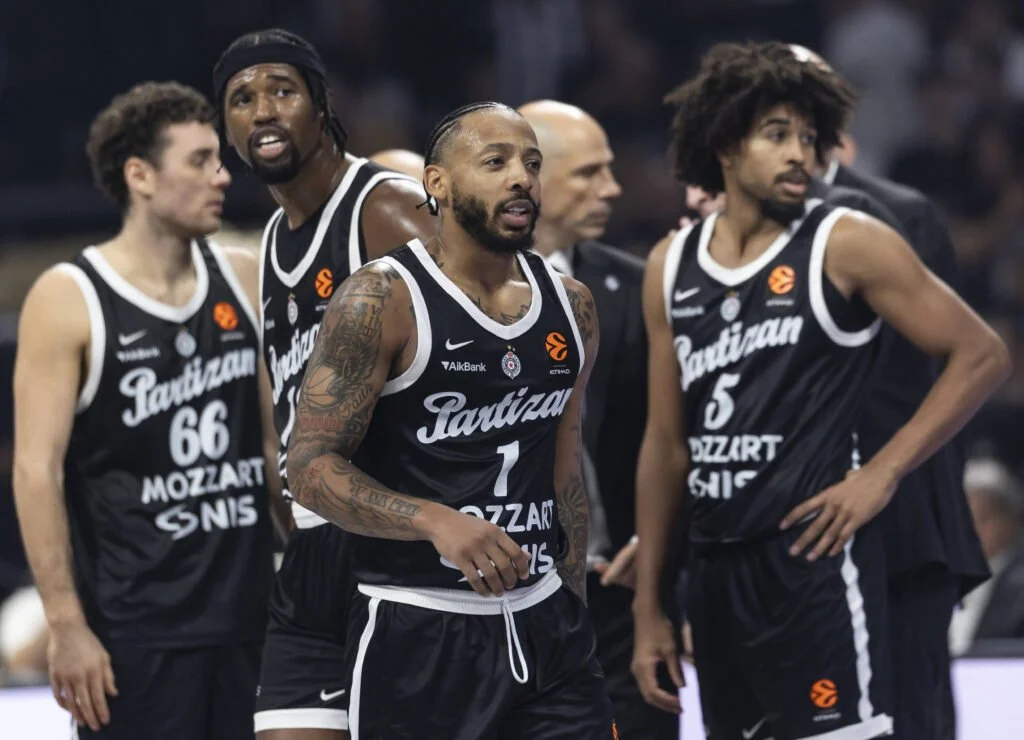
Photo: Safet Begić, Sofascore
Every scouting report on Partizan starts with the same three words: let them shoot.
They make fewer than a third of their threes. They take fewer threes than anyone in the EuroLeague, which, given the first sentence, is the smartest thing they do on offense. At the free-throw line, where nobody is allowed to guard them, they hit about two out of three, worst in the competition. Their offense is tied with Baskonia's for the lowest rating in the league.
And yet here they are at 4-4, with the 4th-best defense in Europe and a habit that should worry every ball handler in the league: nobody steals the ball more often.
The trick is easy to describe and hard to copy. Partizan have stopped trying to win shooting contests. They win counting contests instead. Who gets more possessions, who wastes fewer of them, who gets more shots up by the final buzzer. That's a game a bad-shooting team can win, as long as it has the right hands.
Partizan have stopped trying to win shooting contests. They win counting contests instead.
Same offense, different planet
Put Partizan next to the teams that score like them and the season stops looking like a fluke. Baskonia score at exactly the same rate and are 1-7. Anadolu Efes are a shade better with the ball and sit at 3-5. Partizan's edge over both lives entirely at the other end of the floor: Baskonia's defense ranks 16th, Anadolu Efes's 11th, Partizan's 4th.
Same broken offense, three very different seasons. The difference is what happens when the other team has the ball.
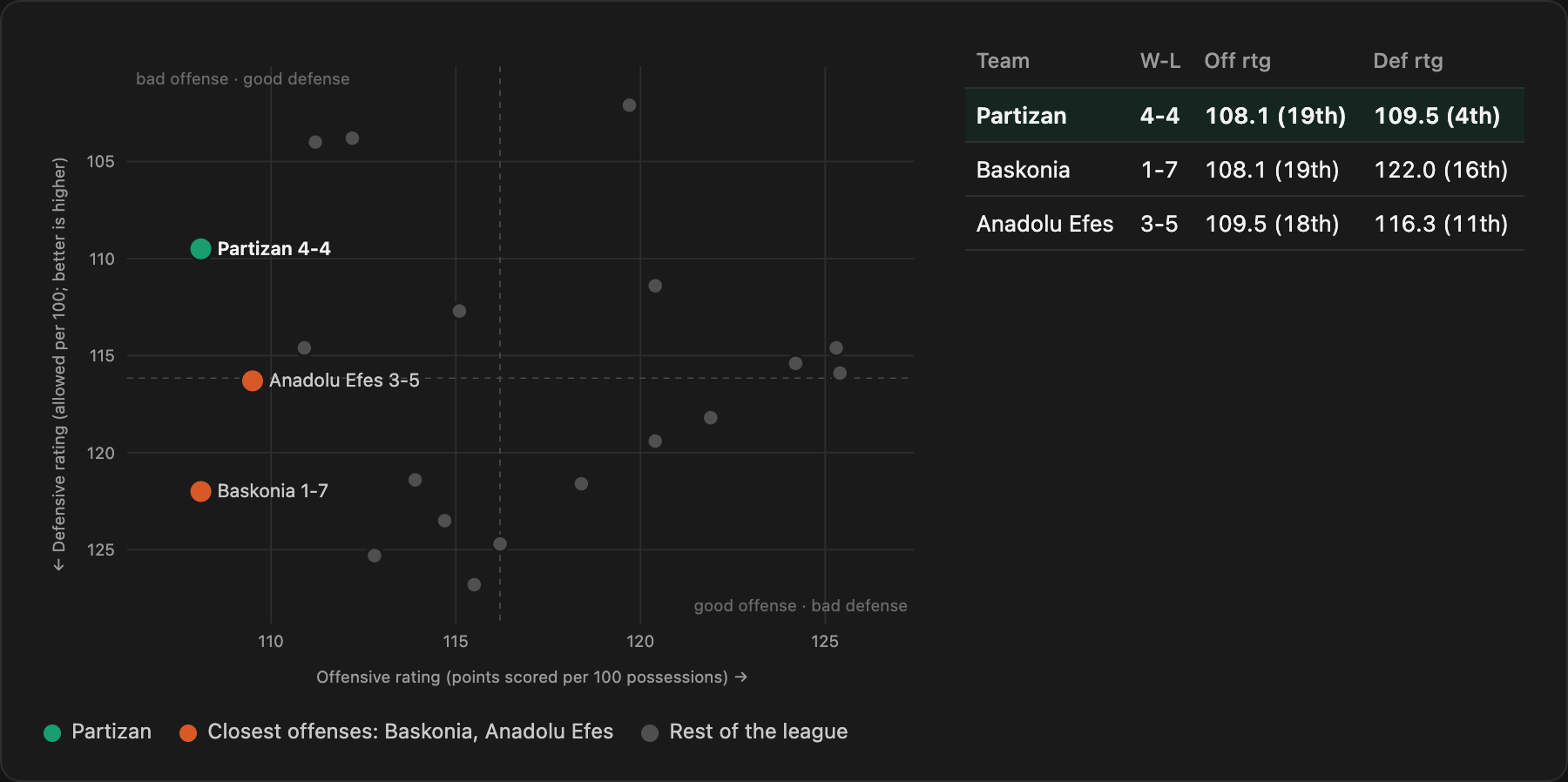
Official offensive and defensive ratings, 2026-27. Points scored and allowed predict 3.2 wins for Partizan; they have 4.
If anything, the scoreboard has been a little generous. On points scored and allowed alone, a team like this should have won about three games, not four. Partizan have squeezed close to a full extra win out of a margin that doesn't deserve it, and that is usually the sign of a team that refuses to lose the possession battle even on the nights it loses the shooting one.
Two pickpockets from Bologna
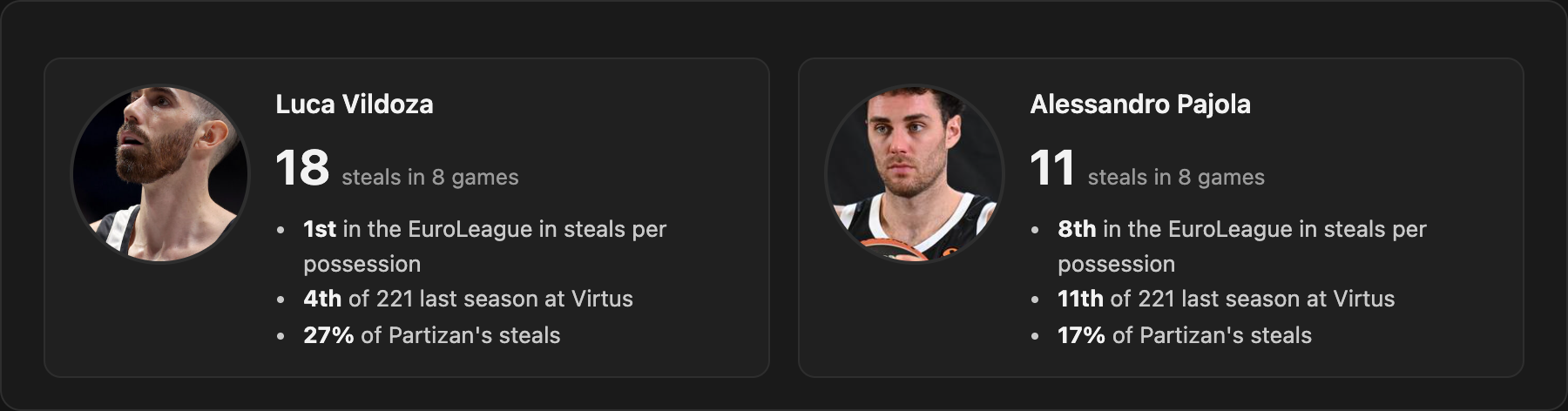
The defense has a return address. This summer Partizan signed Luca Vildoza and Alessandro Pajola from Virtus, two guards who spent last season among the EuroLeague's best at taking the ball: Vildoza 4th and Pajola 11th in steals per possession.
Nothing got lost in the move to Belgrade. Vildoza leads the league in steals per possession, Pajola is 8th, and between them they account for more than two in five of Partizan's steals. These aren't lucky deflections. This is what these two do for a living.
The cleanest way to see what they changed is to split Partizan's defense by who is on the floor, and this is where the story gets good.
With neither guard out there, Partizan take the ball away less often than last season's team did, and last season's team was not a good defense. Strip out the two Virtus guards and the ball-hawking disappears. Add Vildoza alone and the turnovers tick up, though he gives some of it back with gambles that don't land. Add Pajola alone and the whole defense improves, turnovers and all.
Put them on the floor together and you get something else entirely: a defense that takes the ball away on almost a quarter of opponent possessions, a rate no EuroLeague team sustains over a season, and allows 96.5 points per 100. That's not a good defense. That's a wall with hands.
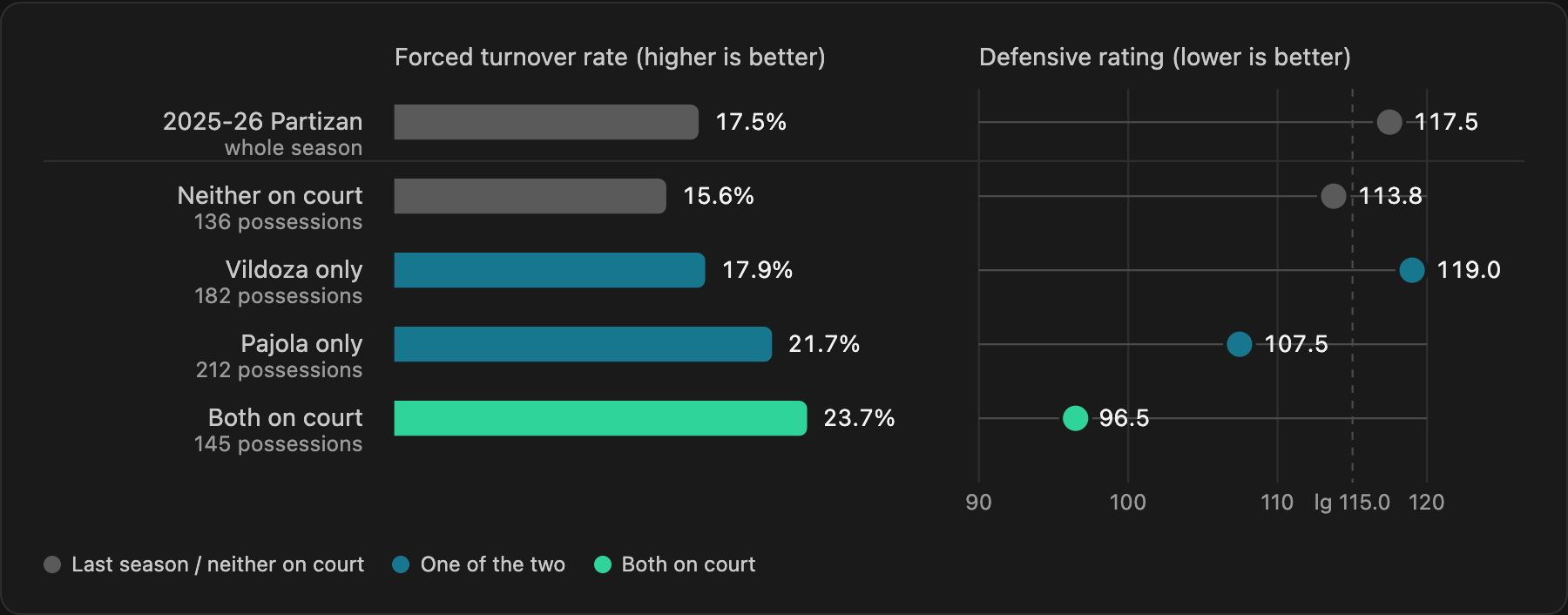
Forced turnover rate and points allowed per 100 possessions, 2026-27, split by which of the two guards is on the floor, against Partizan's whole 2025-26 season.
There's a catch, and it's the fun part. With both guards hunting, opponents stop running anything through the ball handler. Pick-and-rolls, isolations and post-ups die at 0.69 points per possession, and the fast break all but disappears.
The bill arrives one pass later. When two guards jump the ball, someone else is open, and catch-and-shoot looks against this pairing are worth 1.47 points a trip, well above the league average. Partizan aren't hiding it. It's a bet: steals are worth more than open jumpers. So far, the house is winning.
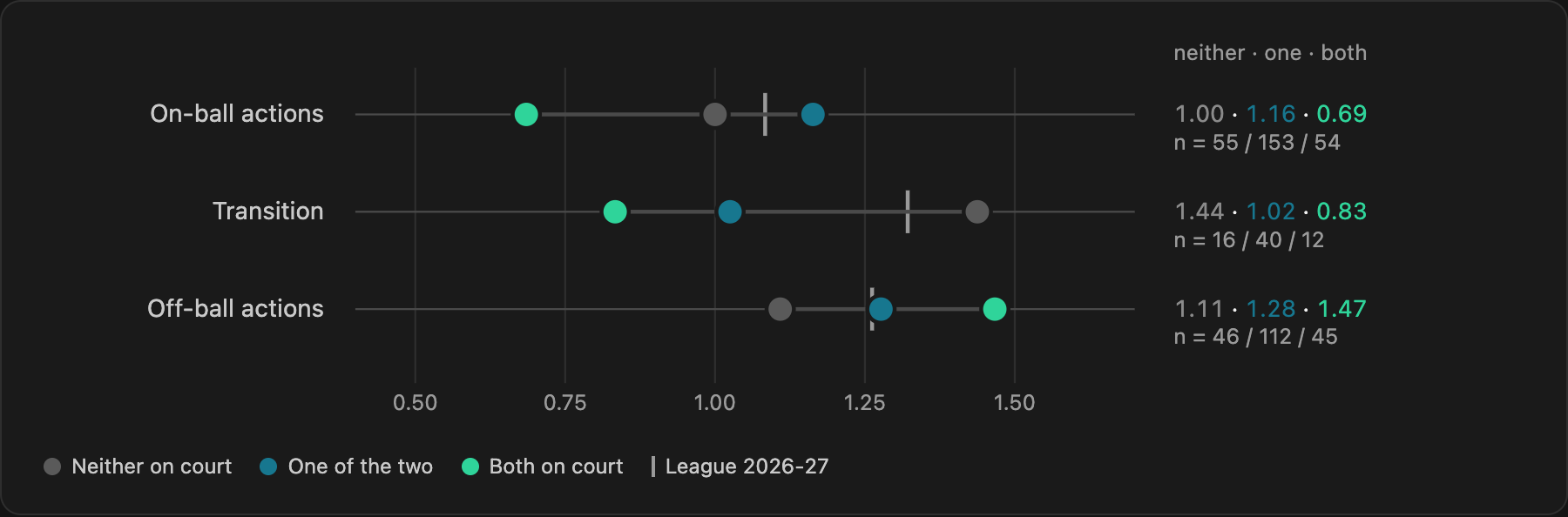
Points allowed per possession by type of opponent action, split by how many of Vildoza and Pajola are on the floor.
Without the two Virtus guards, the ball-hawking disappears. Put them together and it's a wall with hands.
Win the possession war, not the shot
Here's the part that never makes the highlight reel. Partizan have built their whole game around one idea: if you can't make more shots, take more of them.
It starts with what they don't do. Partizan barely chase offensive rebounds; only two teams crash the glass less. Instead, everybody sprints back. That's why opponents get almost nothing in transition: Partizan allow the fewest points per fast-break possession in the EuroLeague.
Take away the easy baskets and the game slows to a crawl. Opponents play more than three possessions per 40 minutes slower against Partizan than they do against everyone else. In those grinding, half-court games the steals pile up, and Partizan rarely hand the ball back: no team in the league has a better turnover margin.
Add it all up and Partizan get more than two extra shots per game compared with the team across from them. For a side that shoots like this, that's the whole ballgame. They don't need to become better shooters. They need more shots, and they've found a factory that makes them.
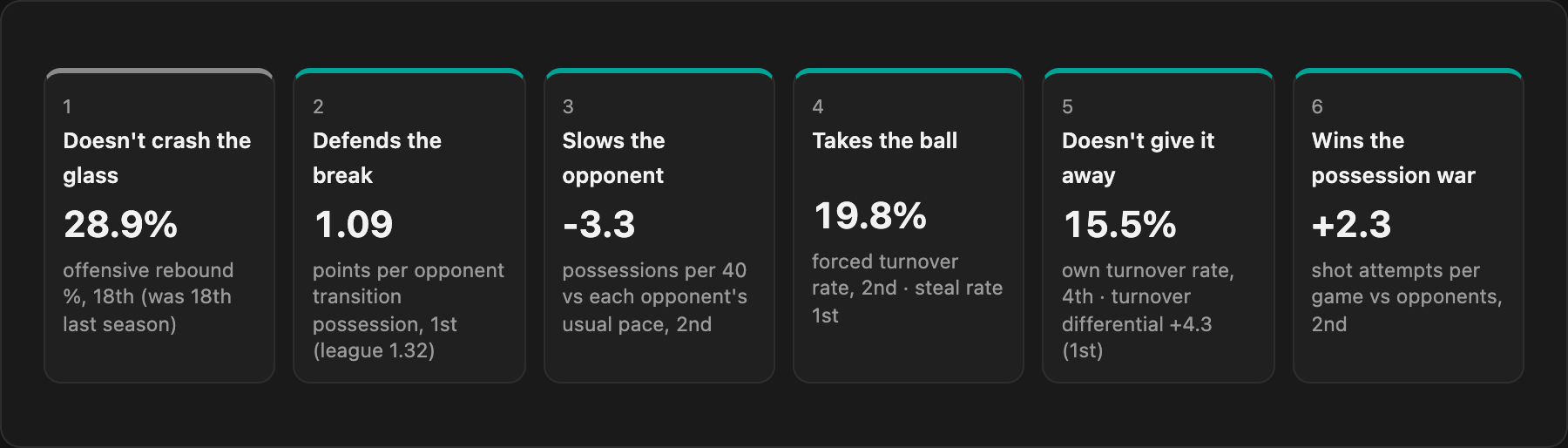
The six-step chain, from the glass to the shot count. League rank in each card.
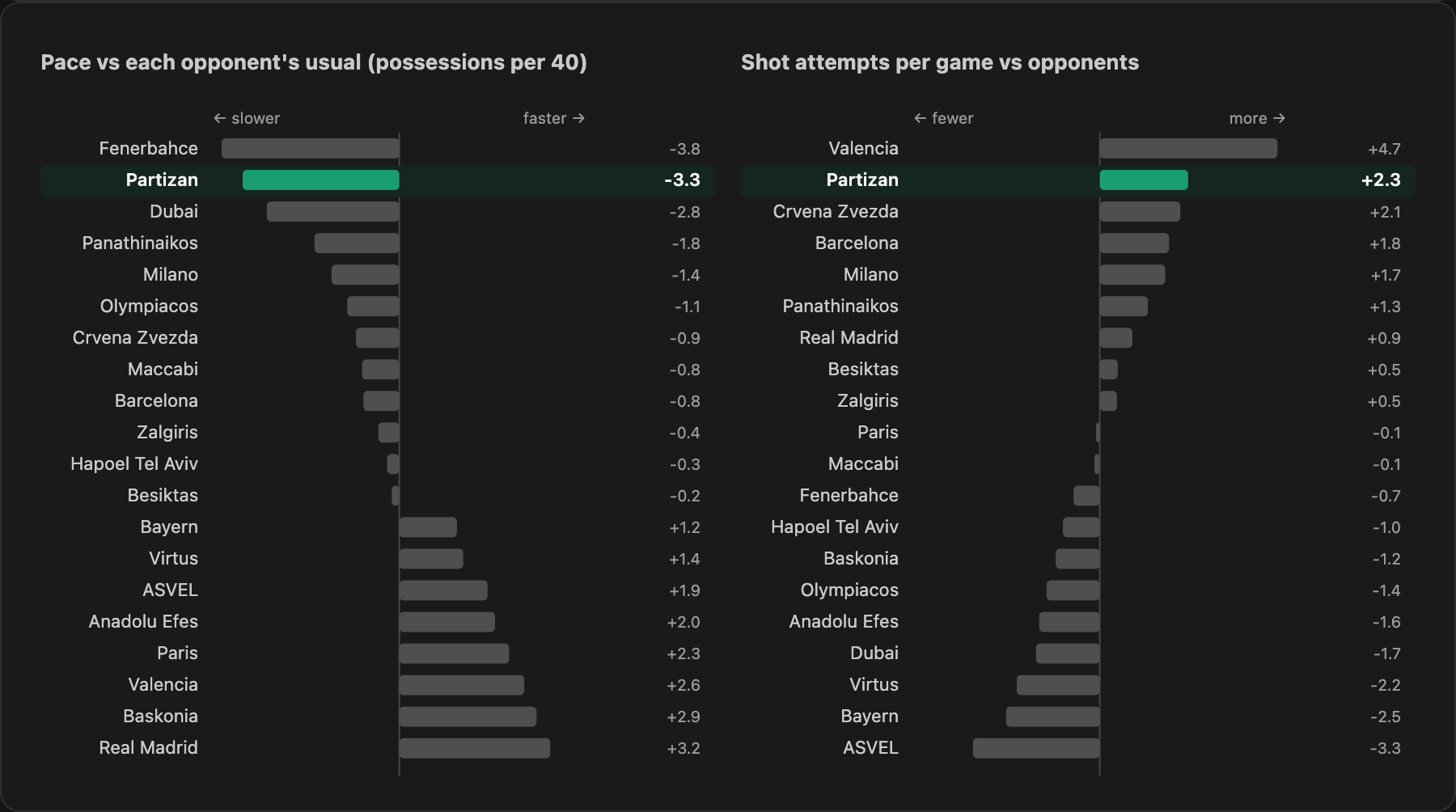
How much each team slows its opponents down, and the extra shot attempts each team gets per game (FGA + 0.44 × FTA).
Split it by result and the pattern sharpens. In Partizan's wins they get about five more shots a game than the other team; in their losses they're dead even.
But extra shots buy a margin for error, not a win. Against Panathinaikos and Fenerbahce, Partizan won the shot count and still lost, because the ball simply wouldn't go in. Against Crvena Zvezda they took fewer shots than the other team and won anyway, because it did. The possession war lets a bad shooting team survive an average night. It can't save an awful one.
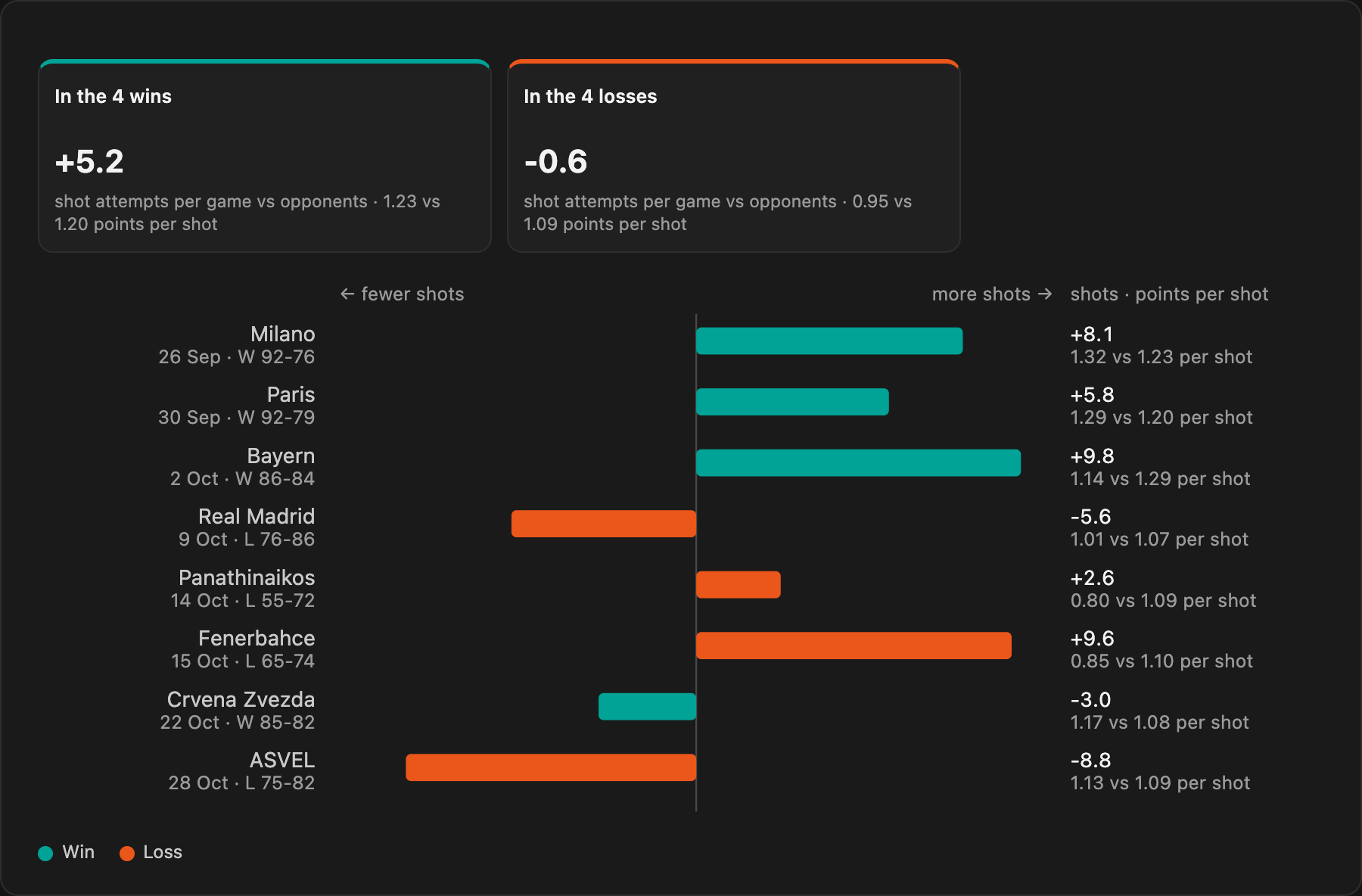
Shot-attempt margin game by game (FGA + 0.44 × FTA, Partizan minus opponent), with points per shot attempt for Partizan vs the opponent.
The offense is one man wide
None of this means the offense is fine. It isn't. The shooting is every bit as bad as advertised, and the free-throw line has been a crime scene.
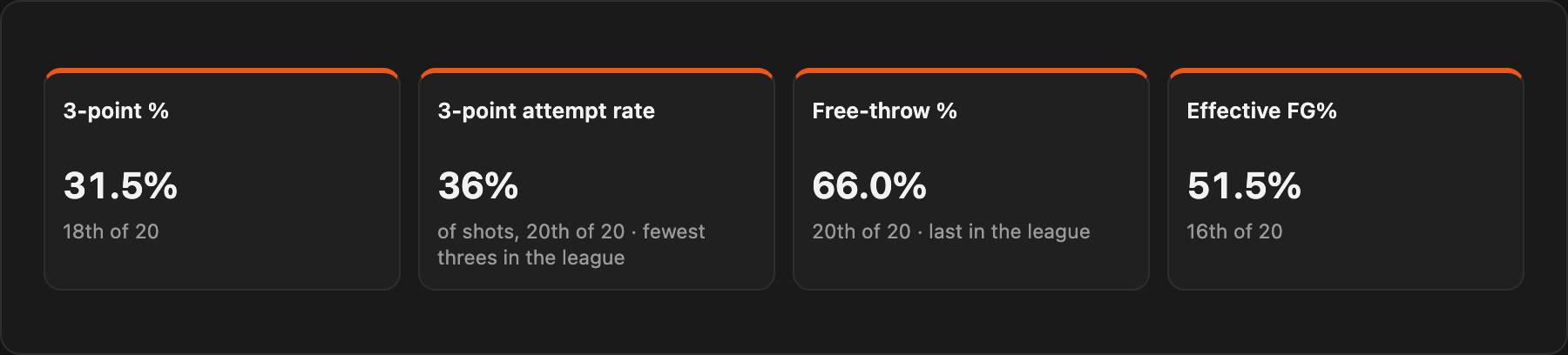
Shooting, 2026-27, with league rank.
What's surprising is where the damage actually happens. Partizan lean on off-ball scoring, catch-and-shoot jumpers, cuts and putbacks, more than most teams do, and they finish those plays about as badly as anyone.
Here's the aha moment. With Carlik Jones on the floor, that off-ball finishing is the weak spot: he creates the looks and his teammates miss them. When Jones sits, those same jumpers actually go in more often. So the shooters aren't the whole problem.
The problem is everything that vanishes with him. Partizan's pick-and-roll game falls off a cliff, and their own fast break goes from useful to nonexistent. Jones isn't just a scorer. He's the reason half their offense exists.
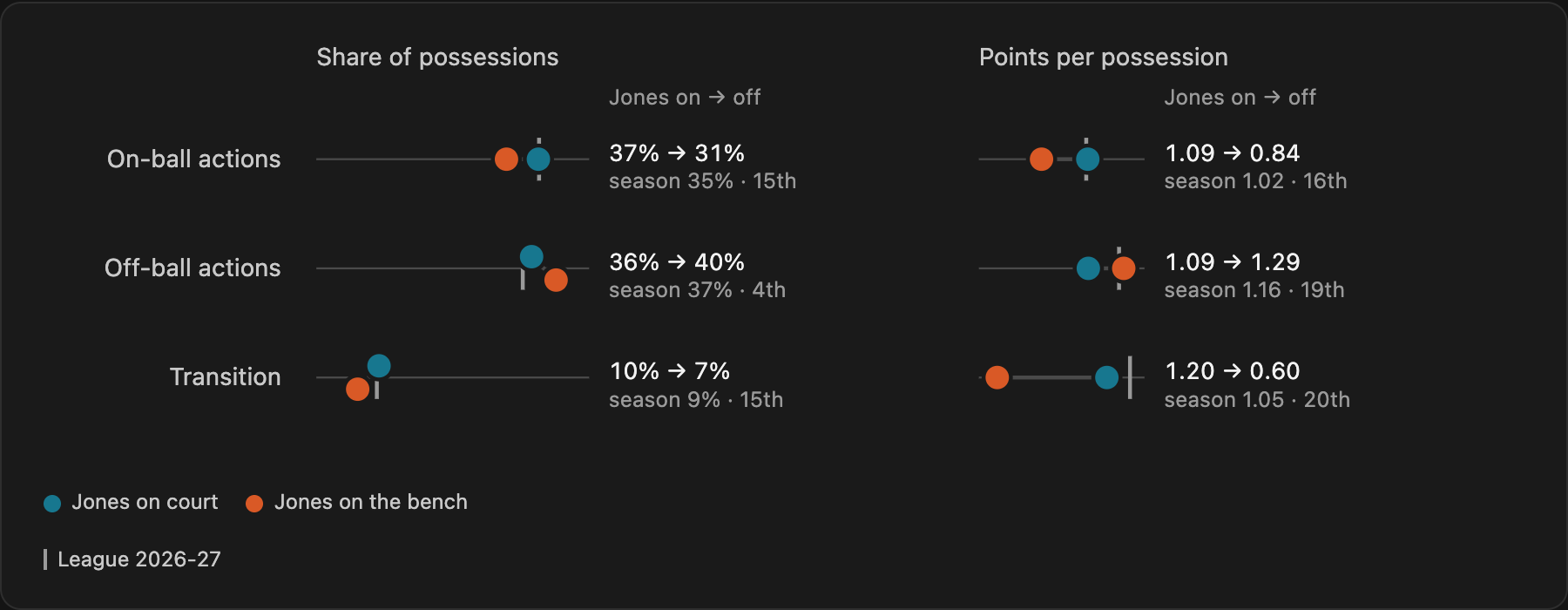
Share of possessions and points per possession by type of action, with Jones on the floor → on the bench. Below each pair: the season value and league rank.
When the maestro sits
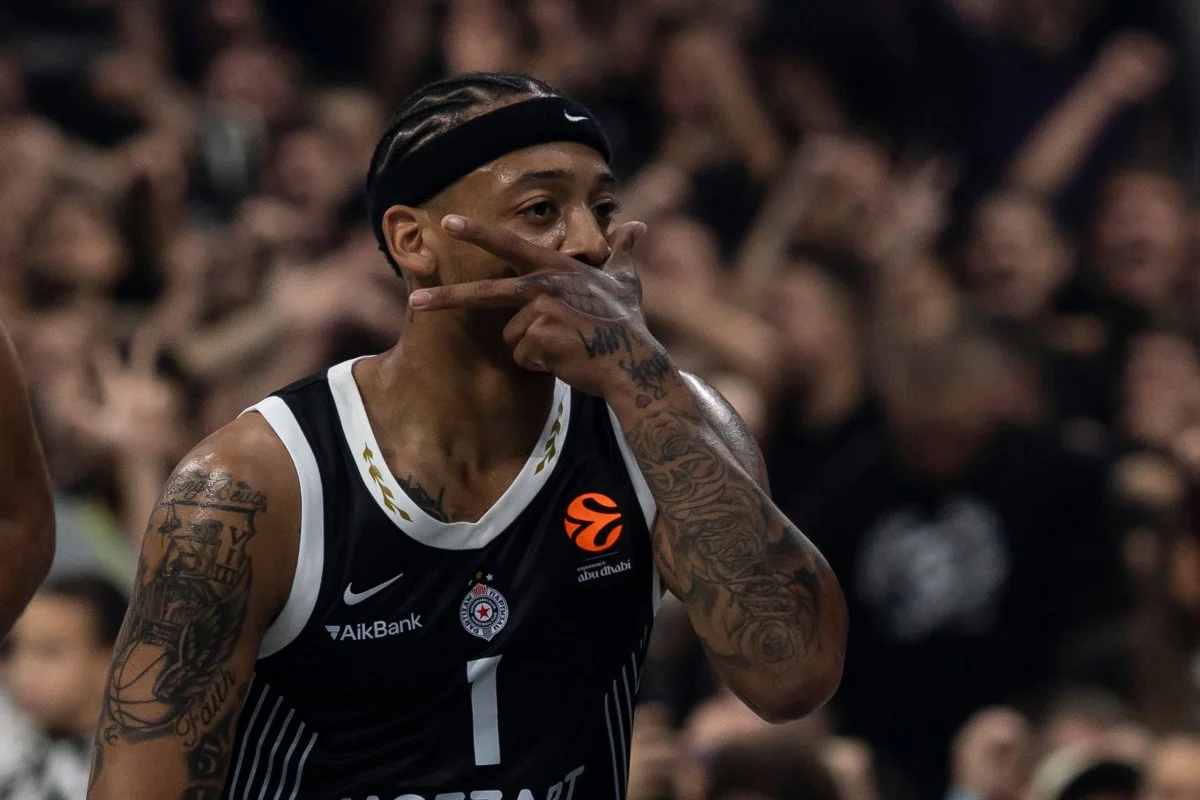
Credit: Basketnews.com
With Jones on the floor, roughly three in every ten Partizan decisions run through him: a shot, a pass, a trip to the line, a turnover. Take him off and the offense doesn't just lose a scorer. It loses its center of gravity.
The ball goes to Luca Vildoza and Allman, who go from bit parts to running about a fifth of the offense each. And the ball suddenly moves. More than four in five made shots come off an assist, a passing team's dream number, until you check the scoreboard.
Because the offense drops from 110.6 to 103.2 points per 100 possessions, the kind of number that loses games, and the turnovers spike. Roughly one in five possessions now ends in a catch-and-shoot jumper, from a team that makes fewer than a third of its threes. Ball movement isn't a virtue on its own. Sometimes it's just what a team does when nobody can beat his man.

Partizan with Jones on the floor → on the bench, 2026-27.
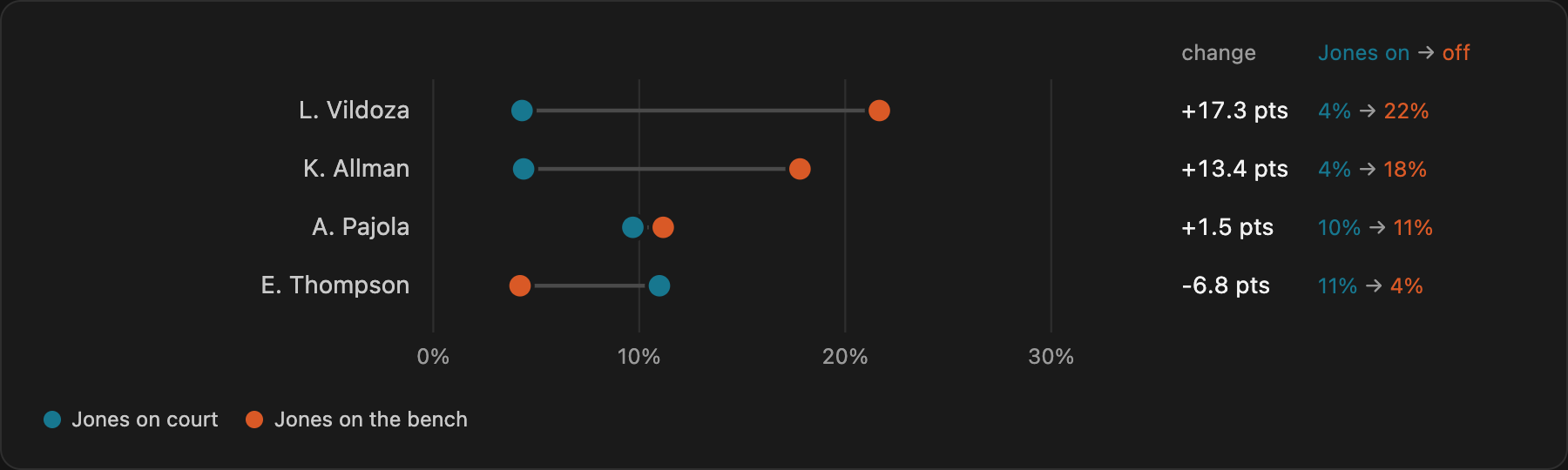
Share of the team's decisions (shots, free-throw trips, turnovers and assists) for each guard, Jones on → off. With Jones on the floor he takes 30% of them himself.
Ball movement isn't a virtue on its own. Sometimes it's just what a team does when nobody can beat his man.
We've seen this movie before
If this all sounds like a theory, last season already ran the experiment for us.
Jones played the first five games and Partizan went 3-2. Then he got hurt, and the season fell apart: 6-17, with a coaching change along the way. He came back in late February, and the same roster finished 7-3. That's not a coach effect. That's a point guard effect.
One word of caution on that 7-3: it came against softer opponents who shot unusually badly from three, and Partizan were taking the ball away only a touch more often than before. This season's version is sturdier. The schedule has been tougher, opponents are shooting close to their normal rate, and the turnovers are real.
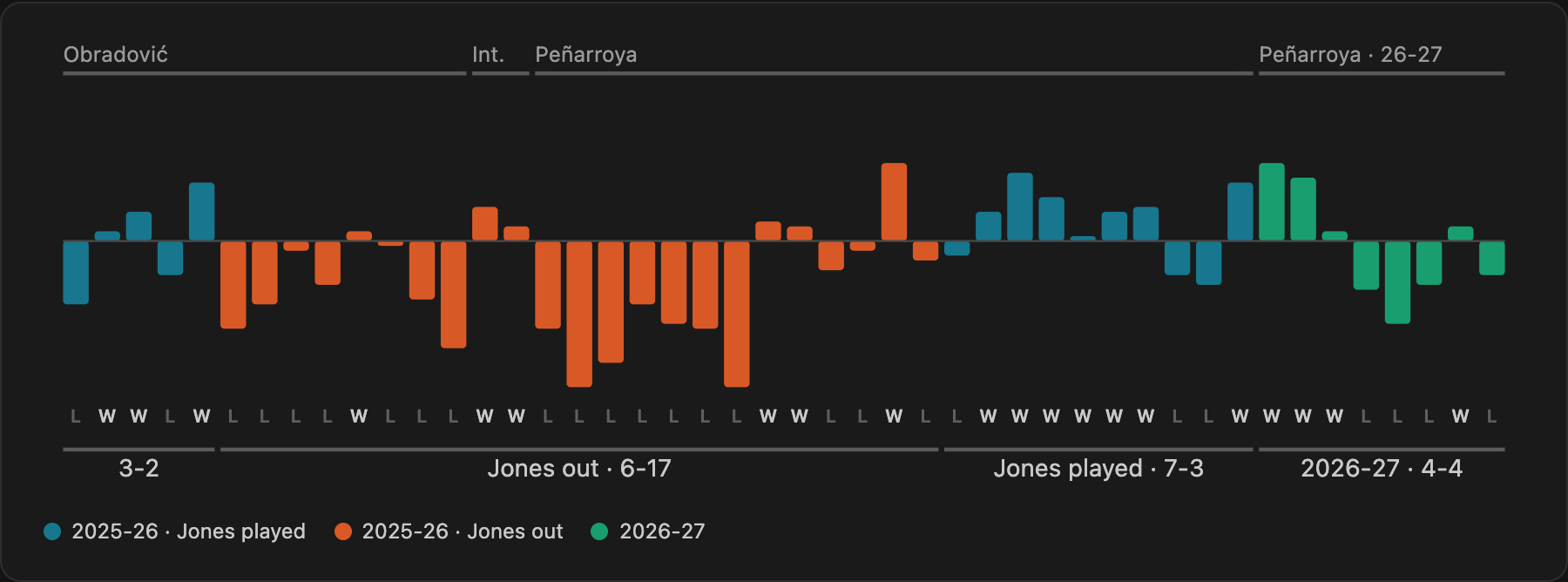
Every Partizan game since the start of 2025-26: bar height = final margin, colour = whether Jones played. Since his return: 11-7.
Can it be sustained?
The defense has the better argument. Its two engines did exactly this in Bologna last year, so it's a skill, not a hot streak, and opponents aren't conveniently missing open shots on Partizan's behalf. The free throws can only get better, too. Shooting two out of three from the line is the kind of number that tends to drift back toward normal on its own.
The worry is the obvious one. Everything above assumes Jones stays on the floor, and last season showed exactly what happens when he doesn't.
The next month is a mixed bag: a trip to Kaunas, then two home games against teams with negative net ratings, then Valencia.
Partizan won't win many shooting contests this season, and they've made their peace with that. Steal the ball, slow the game down, take two more shots than the other team and hand the rest to Carlik Jones. It's ugly, it's deliberate, and it's keeping a team that can't shoot right in the race.